
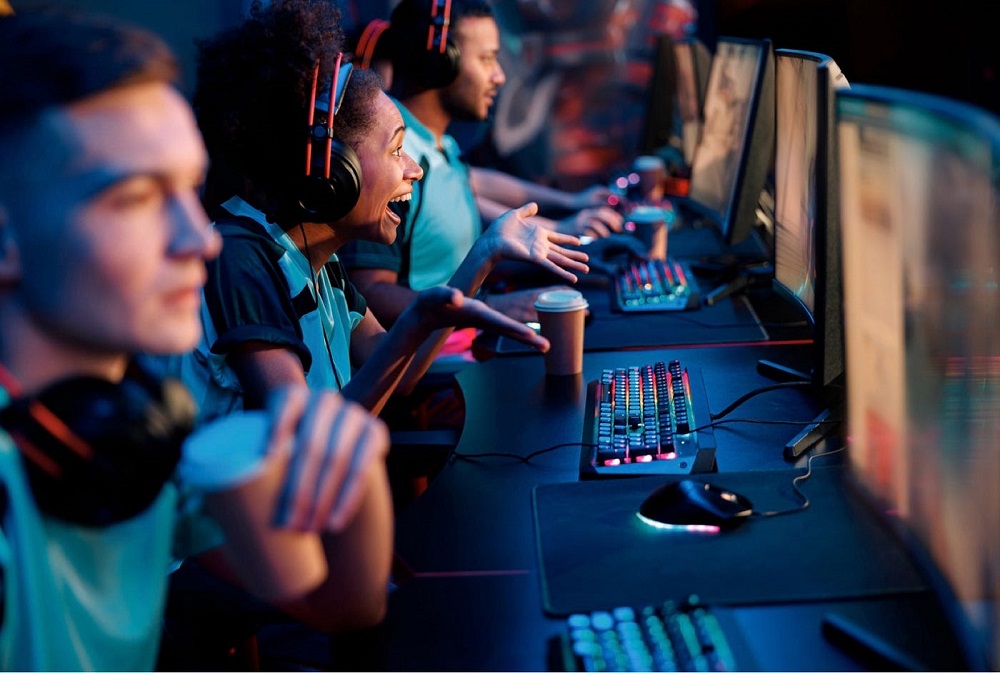

For decades, human connection was entirely dictated by geography. The communities people formed, the friendships they maintained, and the cultural perspectives they encountered were largely limited to their immediate physical surroundings. If you wanted to play a game with someone, they had to sit right next to you on a couch, holding a plastic controller connected to the same console.
Today, that paradigm has shifted entirely. The advent of high-speed global internet infrastructure, cross-platform compatibility, and highly sophisticated social features has transformed multiplayer video games into a massive, borderless ecosystem. Every day, hundreds of millions of individuals from completely different walks of life, time zones, and cultures log into virtual worlds simultaneously. They are not just competing against one another; they are building deep friendships, creating long-lasting communities, and reshaping the very definition of human interaction.
From LAN Parties to Borderless Digital Ecosystems
The journey of multiplayer gaming from a localized activity to a global phenomenon is a testament to rapid technological innovation. In the late 1990s and early 2000s, playing with others online required a profound level of patience and technical know-how. Gamers frequently hauled heavy desktop computers to a single basement or community center for Local Area Network parties, commonly known as LAN parties. These gatherings were physically exhausting but highly rewarding, offering the rare thrill of real-time shared play.
As broadband internet replaced dial-up connections, the landscape began to shift. The introduction of unified matchmaking systems, pioneered by platforms like Xbox Live and early PC networks, allowed players to find opponents instantly without leaving their homes.
In the modern landscape, the final technological barrier dropped with the widespread adoption of cross-play. Historically, a player on a specific console could not interact with someone using a different machine or a personal computer. Today, developers build massive games with structural bridges that allow individuals to play together seamlessly regardless of their chosen hardware. This technical unification has turned isolated player bases into a singular, interconnected global community.
Virtual Worlds as Modern Third Places
Sociologists have long discussed the importance of third places—environments outside of the home and the workplace where individuals gather to converse, unwind, and build social bonds. Historically, these spaces were physical locations like neighborhood cafes, bowling alleys, churches, or public parks. In the modern era, physical third places have experienced a steady decline, leaving a social vacuum that digital environments are actively filling.
Multiplayer games function as the premier digital third places of the twenty-first century. Within sandboxes like Minecraft, survival simulators, and massive multiplayer online role-playing games, the traditional objectives of scoring points or defeating enemies often take a back seat to casual conversation.
Friends use these environments as interactive backdrops for their social lives. They log in after a long workday or school session not necessarily to achieve a high score, but simply to sit in a virtual space together, customize their characters, collaborate on a building project, and talk about their day. The interactive nature of gaming provides a natural buffer against conversational awkwardness, giving people a shared activity to focus on while they open up emotionally to one another.
Overcoming Language and Cultural Barriers
One of the most extraordinary aspects of global multiplayer gaming is its unique ability to act as an international equalizer. In a standard match of a tactical shooter or a cooperative strategy game, a team might consist of individuals stationed in Tokyo, New York, London, and São Paulo. Under normal circumstances, cultural nuances and language barriers might isolate these individuals from one another. Within the context of a game, however, they share an identical objective and an identical set of rules.
To facilitate this cross-cultural cooperation, modern game designers have developed highly sophisticated non-verbal communication systems. The most notable innovation is the context-aware ping system. With a single click of a button, a player can point out an item of interest, signal a tactical path, or warn their teammates of approaching danger.
The game software automatically translates this action into the preferred language of every individual teammate, accompanied by clear visual markers on their screens. This breakthrough allows for highly complex, fast-paced cooperation without requiring a single spoken word, fostering mutual respect and camaraderie across deep linguistic divides.
The Psychological Power of Shared Triumphs and Tribulations
Human beings form incredibly tight psychological bonds when they undergo intense or stressful experiences together. Multiplayer games replicate this bonding mechanism in a safe, structured virtual environment. Cooperative gameplay mechanics force individuals to rely heavily on one another, fostering trust and deep empathy.
Consider the structural design of a high-level raid in a cooperative online game. These challenges require hours of uninterrupted focus, precise synchronization, and a distinct division of labor. One player might act as the protector, absorbing damage to keep the group safe, while others focus on strategy, healing, or offensive output.
When a team spend weeks practicing a difficult encounter, analyzing their mistakes, adjusting their strategies, and finally overcoming the challenge, the resulting surge of shared joy is immensely real. These shared digital victories build genuine psychological affinity, creating a profound sense of shared history among individuals who have never met face-to-face.
Bridging the Generational Divide
The unifying power of multiplayer gaming does not just extend across geographical distances; it also cuts directly through generational barriers. The generation that grew up with early video games is now raising children of their own, leading to an unprecedented era of family gaming.
Multiplayer titles offer a rare common ground where parents, children, and even grandparents can interact on an equal playing field. Unlike many traditional hobbies where age gives a significant physical or intellectual advantage, video games offer diverse mechanics that cater to various skill sets. A parent might handle the complex management systems of a virtual city while their child focuses on exploration and building. This shared digital space creates a vital conduit for regular communication, allowing families separated by hundreds of miles to maintain close, active relationships through creative collaboration.
Global Charity and Grassroots Movements
The tight-knit nature of global gaming communities frequently translates into massive, real-world impact. Because multiplayer games gather millions of passionate individuals into centralized communication networks, they have become highly effective platforms for global charity and humanitarian relief.
Through events like marathon streaming broadcasts, community-led tournament brackets, and special in-game cosmetic sales, players regularly raise tens of millions of dollars for global causes. When a crisis occurs anywhere in the world, gaming communities are often among the quickest to mobilize, organizing digital donation drives and using virtual platforms to raise widespread awareness. This collective philanthropy demonstrates that the bonds formed inside virtual spaces possess the strength to alter real-world lives for the better.
A Borderless Future of Connection
Video games have officially transcended their historical status as isolated entertainment software. They have matured into the most interconnected, culturally diverse social network on the planet. By providing shared spaces, common objectives, and intuitive communication tools, multiplayer games are systematically dismantling the geographical, linguistic, and cultural walls that have historically kept humanity divided. As virtual technologies continue to mature and become even more accessible, the capacity for games to foster genuine global empathy and connection will only continue to expand.
Frequently Asked Questions
How do multiplayer games help individuals who experience social anxiety in physical settings?
Multiplayer games provide a structured social environment with low entry pressure. Because interactions are centered around a shared gameplay objective, individuals with social anxiety do not have to worry about initiating or maintaining traditional small talk. The use of digital avatars allows players to control how they present themselves, providing a comfortable layer of anonymity that helps build conversational confidence at a personalized pace.
What is the impact of global multiplayer games on the development of cross-cultural empathy?
When players regularly cooperate with teammates from different nations, they are exposed to different perspectives, accents, and cultures in a highly positive context. Working together toward a common goal humanizes individuals across political or geographical divides, directly challenging preconceived stereotypes and fostering a broader, more empathetic worldview through repeated positive contact.
Are there specific game design elements that encourage cooperation over toxic competition?
Yes, game developers utilize specific design mechanics to cultivate positive communities. Features like separate cooperative game modes, shared loot systems where players do not have to fight over resources, and commendation systems that reward helpful behavior all encourage a supportive environment. Conversely, minimizing individual performance metrics in favor of overall team success helps reduce friction between strangers.
How do modern multiplayer games handle accessibility for players with physical disabilities?
The gaming industry has made significant strides in accessibility. Modern multiplayer titles include extensive feature suites such as highly customizable button remapping, text-to-speech and speech-to-text translation for voice chat, advanced colorblind modes, and audio cues for visual events. Furthermore, specialized hardware like adaptive controllers allows individuals with limited mobility to play alongside the global community seamlessly.
How do virtual economies within multiplayer games strengthen social relationships?
Virtual economies encourage social interdependence through trading, crafting, and gifting mechanics. In many titles, a single player cannot master every professional skill or acquire every resource independently. This structural limitation forces players to form guilds, establish trade networks, and negotiate with others, creating a complex web of mutual reliance that serves as a foundation for long-term social communities.
Can playing multiplayer games with international players improve language acquisition skills?
Yes, many language learners use global multiplayer games as an immersive tool to practice conversational skills. Because effective gameplay often requires quick communication and real-time coordination, players are forced to listen to native speakers, pick up contextual slang, and practice speaking or typing in a practical, high-motivation setting that conventional classroom learning rarely replicates.

Comments are closed.