
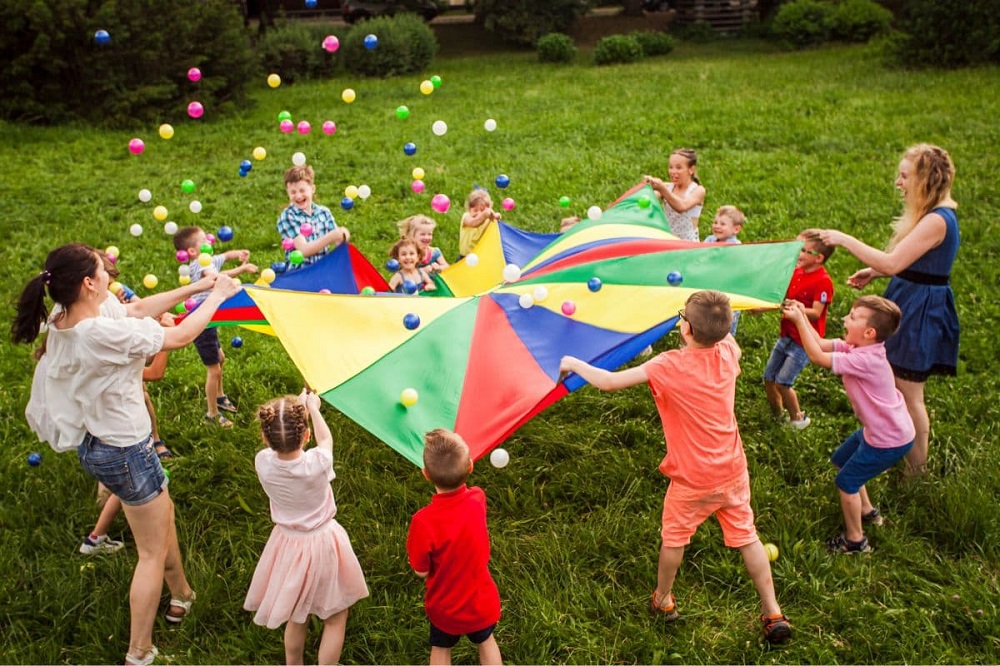

In an era dominated by high-definition displays, notifications, and virtual interactions, the simple act of gathering outdoors has taken on a new level of importance. Stepping away from digital devices to engage in physical games provides more than just fresh air and exercise. It offers a rare space for families and groups to look each other in the eye, share spontaneous laughter, and build meaningful connections.
Whether planning a casual backyard Sunday barbecue, a large multi-generational family reunion, or a structured corporate retreat, outdoor games serve as an incredible social equalizer. They break down conversational barriers, encourage cooperative problem-solving, and build physical and emotional bonds that indoor activities rarely replicate. This comprehensive guide details the best outdoor games that strike the perfect balance between accessible family entertainment and effective team-building dynamics.
Lawn Games That Bridge the Generational Divide
The best family games are those that allow a seven-year-old child and a seventy-year-old grandparent to participate on an equal playing field. These games prioritize coordination, strategy, and patience over raw speed or physical strength.
Kubb: The Ancient Viking Lawn Game
Originating from Scandinavia, Kubb has quickly become a modern backyard favorite across North America. The game is played on a rectangular grass pitch where two opposing teams attempt to knock over wooden blocks, known as kubbs, by tossing wooden batons. Once a team successfully topples all of the opponent’s smaller blocks, they must knock over a larger, central block called the king to secure victory.
Kubb is an exceptional team-building game because it demands strategic sequencing. Teams must collaborate on which target blocks to prioritize and decide who possesses the steady hand required for the final tactical throws. Because the wooden pieces can be thrown underhand with minimal physical exertion, it allows players of all ages and fitness levels to contribute meaningfully to the group victory.
Bocce Ball: A Classic Test of Precision
Dating back to the ancient Roman Empire, bocce ball remains a premier choice for outdoor gatherings. The mechanics are simple: one team throws a small target ball, called the pallino, into the grass. Players then take turns rolling larger, heavier bocce balls with the goal of getting them as close to the target ball as possible.
The team-building value of bocce lies in its constant tactical shifts. A well-placed shot by an opponent can completely change the landscape of the round, forcing a team to alter their strategy from offensive scoring to defensive blocking. The game encourages constant communication, gentle ribbing, and collaborative calculation, all while maintaining a relaxed, conversational pace.
High-Energy Games for Active Team Building
When the goal of an outdoor gathering is to elevate heart rates, foster intense camaraderie, and encourage physical agility, fast-paced team games are the ideal solution. These activities are particularly effective for corporate groups looking to break down workplace hierarchies or active families with plenty of energy to burn.
Capture the Flag: The Ultimate Strategy and Coordination Exercise
Capture the Flag is a timeless classic that transforms any large park or wooded area into a dynamic tactical battlefield. The playing area is divided into two distinct territories. Each team hides a physical flag within their zone, and the objective is to venture into enemy territory, steal their flag, and bring it safely back across the centerline without being tagged and sent to the virtual jail.
This game serves as a masterclass in organizational teamwork. A successful team cannot rely solely on the fastest runners. Instead, they must establish a clear division of labor, appointing specific players to defend the home base, others to act as scouts, and a coordinated group to execute diversionary offensive runs. It teaches individuals how to communicate under pressure, trust the roles assigned to their peers, and sacrifice individual glory for the collective success of the unit.
Spikeball: Fast-Paced Reflexes and Communication
Spikeball, legally known as roundnet, has exploded in popularity across college campuses, parks, and beaches worldwide. Played with two teams of two, the game centers around a small, trampoline-like net placed flat on the ground. Players use their hands to smack a yellow ball down onto the net, causing it to ricochet up toward the opposing team, who then have up to three alternating touches to hit it back onto the net.
Spikeball is an intense exercise in non-verbal communication and spatial awareness. Because there are no boundaries or fixed sides once a point begins, partners must constantly move around the net in unison, anticipating each other’s positioning and covering open spaces. The rapid pace of play builds lightning-fast reflexes and forged partnerships, making it an excellent icebreaker for smaller groups.
Low-Friction Games for Instant Casual Fun
Sometimes, an outdoor gathering requires games that do not demand extensive rules explanations, large playing fields, or intense physical exertion. These low-friction games are designed for casual pick-up play, allowing guests to float in and out of the action with ease.
-
Cornhole: The quintessential American backyard game. Players take turns tossing fabric bean bags at a raised wooden platform with a hole cut into the far end. Scoring is straightforward: a bag on the board is worth one point, and a bag through the hole is worth three points. Its simplicity allows players to hold a conversation or a beverage in one hand while competing with the other.
-
KanJam: A highly addictive disc-tossing game that utilizes two large, open-ended plastic bins placed fifty feet apart. Teams of two work together to score points. One partner throws the flying disc toward the goal, while the other partner acts as the deflector, using their hands to redirect the flying disc into the bin or slap it against the outer wall. It requires quick hand-eye coordination and immediate physical synchronization between partners.
The Psychological Power of Play Outside the Office and Home
The true value of these outdoor activities extends far beyond the physical movements required to play them. Engaging in recreational games outside structural settings fundamentally alters human social dynamics.
In a corporate environment, a manager and an entry-level intern rarely interact on an equal social plane. However, when placed on the same Capture the Flag team, those corporate titles vanish. Success depends entirely on mutual trust, clear communication, and collaborative effort. This leveling effect humanizes colleagues, breaks down professional silos, and fosters an authentic sense of mutual respect that easily carries back into the traditional office environment.
For families, outdoor games create shared physical history. Long after a family reunion ends, the memories that persist are rarely about the catered food or the travel logistics. Instead, relatives remember the dramatic final throw in Kubb, the accidental stumble during a race, or the unexpected defensive play in Cornhole. These shared moments of vulnerability, triumph, and laughter form the structural glue that holds family histories together across generations.
Frequently Asked Questions
What are the best modifications to make outdoor games accessible for individuals with limited mobility?
Most outdoor lawn games can be adapted easily to accommodate varying physical abilities. For games like Cornhole or Bocce Ball, the throwing distance can be shortened significantly, or players can compete while seated in chairs placed at the boundary lines. For strategy games like Capture the Flag, a individual with limited mobility can serve as the designated base commander, managing the team’s tactical map, radio communications, and defensive positioning from a central hub.
How can a group play high-energy games safely during peak summer heat?
When organizing outdoor activities in high temperatures, safety must be the top priority. Schedule high-energy games like Spikeball or Capture the Flag during the early morning or late evening hours when the sun is less intense. Ensure there is a mandatory hydration station with water and electrolyte drinks, establish shaded rest areas, and build mandatory five-minute cooling breaks into the rules after every round of play.
What parameters define a good outdoor game for a corporate team-building event?
An effective corporate team-building game should require interdependent collaboration rather than relying on individual physical prowess. The game must have a low technical barrier so that no single employee feels excluded due to a lack of sports background. Games like Kubb or a structured scavenger hunt are ideal because they require strategic debate, role assignment, and consensus-building, directly mirroring the collaborative skills needed in the modern workplace.
How do you handle scorekeeping in a casual family game to prevent overly intense arguments?
To maintain a friendly atmosphere during family gatherings, consider shifting the focus from individual scores to collective milestones. Alternatively, you can rotate team rosters after every single round so that players are constantly playing with different relatives, preventing any single rivalry from becoming toxic. Utilizing humorous penalties, such as requiring the losing team to serve dessert to the winners, also helps keep the mood light and cooperative.
Can lawn games like Kubb be played effectively on surfaces other than flat grass?
Yes, many traditional lawn games are highly versatile. Kubb, Bocce Ball, and Cornhole can be played successfully on packed dirt, gravel paths, sandy beaches, or even snow during winter gatherings. The changing texture of the ground simply adds an extra layer of unpredictable strategy to the game, as players must adjust their throwing force and spin to accommodate how the wooden blocks or balls slide and bounce on the different surfaces.
What is the ideal group size for organizing a backyard tournament of casual games?
For a highly engaging backyard tournament, an ideal group size is anywhere from eight to twenty-four participants. This number allows you to divide the crowd into four balanced teams of two to six players each. With this structure, two games can run simultaneously, ensuring that everyone remains actively involved as either a player or a cheering spectator, minimizing long periods of downtime where guests might lose interest.

Comments are closed.