
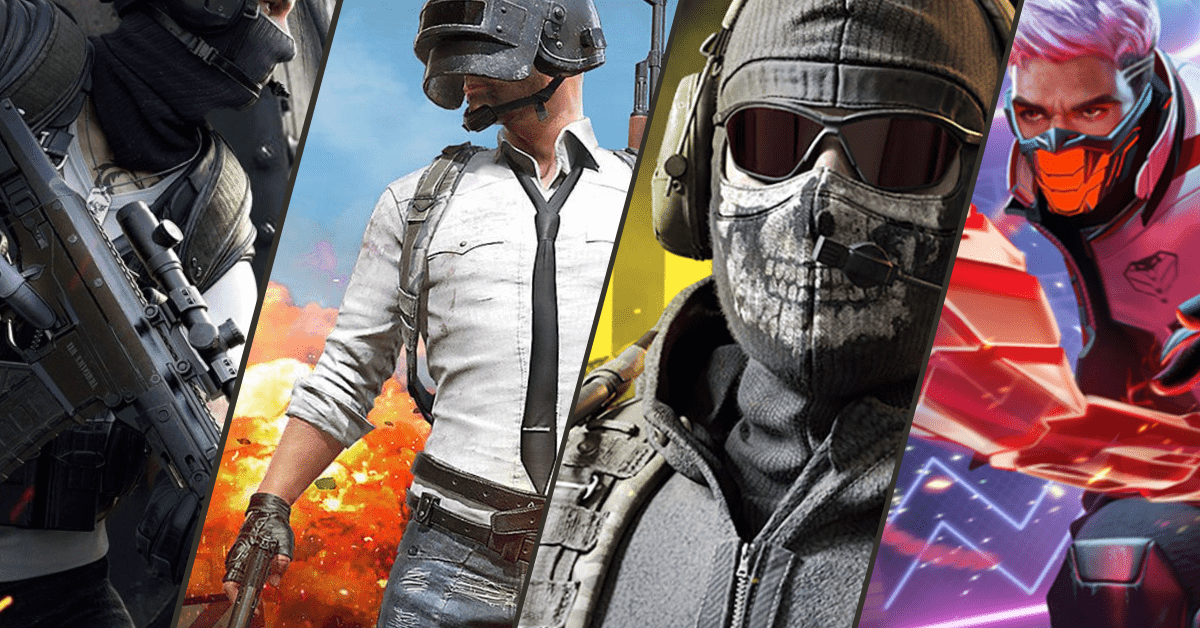

The landscape of modern shooter games has grown incredibly sophisticated. Whether diving into tactical first-person shooters, high-stakes battle royales, or fast-paced arena combat, players face a highly demanding competitive environment. Succeeding in these digital arenas requires far more than just fast physical reflexes.
At the highest levels of play, shooter games function as high-speed chess matches. Winning consistently demands a deep understanding of spatial geometry, resource management, mathematical positioning, and psychological warfare. Relying purely on raw aiming ability will eventually lead to a performance ceiling. To truly dominate the leaderboards, you must develop a comprehensive tactical framework. This guide outlines the essential mechanical, structural, and mental strategies required to elevate your gameplay and achieve consistent success in any shooter title.
Perfecting the Mechanics of Direct Engagement
Before exploring complex team strategies, you must establish a flawless physical foundation. Mechanical skill provides the mechanical consistency needed to execute tactical decisions under extreme pressure.
The Science of Aiming and Reticle Placement
The most common mistake amateur players make is poor crosshair placement. Many players unconsciously walk through virtual environments with their crosshairs pointing at the floor or generic walls. This habit drastically increases the physical distance the hand must move the mouse or thumbstick to target an opponent when a sudden encounter occurs.
To optimize your reaction times, cultivate the habit of disciplined crosshair placement. Your reticle should always rest at head height, pre-aimed at the exact corner or angle where an enemy is most likely to appear. When navigating corners, utilize a technique known as slicing the pie, clearing the angle inch by inch while keeping your crosshair tightly glued to the environmental edge. This minimizes your physical adjustment time to a fraction of a second, allowing you to secure the initial shot.
Understanding Mouse Sensitivity and Hardware Optimization
Many developing players assume that higher mouse sensitivity translates to faster mechanical reactions. In practice, excessively high sensitivity leads to erratic over-corrections and inconsistent muscle memory.
Most competitive professional players utilize relatively low sensitivity settings paired with large mouse pads. This configuration forces the use of the entire arm for large tracking movements while reserving fine wrist and finger adjustments for precise micro-aiming. Additionally, ensuring your display operates at a high refresh rate with low input latency provides the smooth, real-time visual clarity required to track fast-moving targets accurately.
Geometry and Spatial Management on the Virtual Battlefield
In shooter games, positioning routinely defeats raw mechanical skill. Knowing how to manipulate the three-dimensional geometry of a map allows you to tilt the odds of an engagement heavily in your favor before a single round is fired.
-
The Angle of Perspective and Cover: When fighting around a solid corner, the player who is standing furthest back from the physical edge possesses a geometric advantage. Due to the way perspective works in 3D game engines, standing directly against a wall reveals your shoulder and arm to a distant opponent before you can see their position. Always maximize your physical distance from your immediate cover to grant yourself a wider, safer line of sight.
-
The Power of the High Ground: Securing elevated positioning remains one of the oldest and most effective tactical principles in warfare, directly applying to digital combat. Holding the high ground restricts the physical target profile you present to enemies below, often exposing only your head. Conversely, opponents on the lower ground are completely exposed, forcing them to aim upward at difficult angles while dealing with limited visibility.
-
Isolating Encounters and the One-versus-One Directive: When facing multiple enemies simultaneously, rushing out into the open is a guaranteed path to defeat. Superior players utilize local cover to intentionally break a large battle down into a sequence of isolated single engagements. By exposing yourself to only one angle at a time, you can systematically eliminate an entire squad without ever allowing them to coordinate a synchronized, simultaneous attack against you.
Information Control and Map Literacy
Information is the most valuable currency in any competitive match. The team that accurately reads the map, monitors audio cues, and tracks resource expenditures will consistently outmaneuver an opponent blindly relying on mechanical skirmishes.
Mastering the Audio Landscape
Modern shooter games utilize highly sophisticated three-dimensional audio engines. Every footstep, reloading sound effect, weapon swap, and grenade pin pull provides concrete data regarding an opponent’s precise location and status.
Investing in a quality stereo headset and learning to interpret subtle acoustic cues is vital. For instance, the specific sound of footsteps changes depending on the surface material, telling you instantly whether an enemy is running on metal grating, wooden floors, or outdoor grass. Furthermore, managing your own audio footprint by walking silently or crouch-moving during stealth scenarios prevents the enemy from pre-firing your position.
Economizing Resources and Map Rotations
Success in long-form matches or battle royales requires meticulous resource management. You must continuously calculate your team’s ammunition levels, healing items, armor values, and tactical utility items like smoke or flash grenades.
Map literacy involves understanding the natural flow of a match. You must anticipate how enemy teams will rotate based on objective locations, spawning rules, or shrinking play zones. Predicting these movements allows your team to set up lethal ambushes, trap opponents in choke points, and secure dominant defensive positions well before the enemy arrives.
The Mental Game: Communication, Callouts, and Tilting
The psychological component of competitive gaming is just as impactful as physical execution. A team of average mechanical players utilizing flawless communication will routinely defeat a collection of highly skilled individuals operating in complete silence.
To communicate effectively under pressure, you must eliminate emotional clutter from your voice channel. Avoid venting frustration over a microphone after a defeat. Instead, provide immediate, objective data using a structured callout format: identify the specific location name, the number of active targets, the direction of their movement, and their estimated health status. Keep descriptions short, clear, and uniform.
Additionally, maintaining emotional regulation is crucial for personal consistency. Experiencing tilt—a gaming term for psychological frustration that degrades decision-making—forces players to play overly aggressive, ignore tactical positioning, and make reckless choices. Recognizing the early physical signs of frustration and deliberately slowing down your breathing helps reset your focus, allowing you to approach the next round with a cold, analytical mindset.
The Path to Elite Performance
True mastery of the shooter genre requires a conscious shift from casual recreation to structured, deliberate practice. Every match you play should have a specific learning objective, whether that means focusing entirely on your crosshair placement for an evening or masterfully controlling a specific map lane. By marrying disciplined mechanical fundamentals with geometric awareness, rigorous information gathering, and absolute emotional control, you transform the game from a chaotic test of luck into a highly predictable, manageable, and victorious science.
Frequently Asked Questions
What is the mechanical difference between tracking aim and flick aim?
Tracking aim is the continuous, fluid movement required to keep your crosshair perfectly locked onto a constantly moving target over an extended period, which is essential when using automatic weapons. Flick aim is a rapid, instantaneous muscle contraction used to snap your crosshair from a neutral position directly onto a target for a single, high-damage shot, commonly utilized with precision sniper rifles or shotguns.
How does the concept of peekers advantage affect online shooter matches?
Peekers advantage is a technical phenomenon caused by natural network latency. When a player quickly runs around a corner to look for an opponent, their local computer displays the enemy instantly. However, due to the fraction of a second it takes data to travel to the server and back, the stationary defender receives that movement data with a slight delay. This brief window allows the aggressive peeker to see and shoot the defender before appearing on the defender’s screen.
Why is managing weapon recoil spray patterns so important?
When you hold down the trigger of a weapon in most shooter games, the bullets do not travel in a perfectly straight line; instead, the weapon kicks upward and side-to-side in a specific, predictable pattern known as a recoil spray. To keep your shots accurate at medium to long distances, you must learn the exact physical shape of this pattern and manually move your mouse or thumbstick in the exact opposite direction to counteract the physical deviation.
What is the role of utility items like smoke and flash grenades in competitive play?
Utility items are designed to alter the physical layout and visibility of an area without using direct lethal force. Smoke grenades are utilized to block an opponent’s line of sight, allowing your team to cross open streets safely or execute a clean retreat. Flash grenades temporarily blind and deafen enemies behind an angle, disrupting their crosshair placement and rendering them highly vulnerable to an immediate offensive push.
How can a player determine their optimal mouse DPI setting?
Dots Per Inch, or DPI, measures the physical sensitivity of a mouse sensor. To find your ideal setting, aim for a balance where a comfortable sweep of your hand across your mouse pad allows your character to perform a perfect one-hundred-and-eighty-degree turn smoothly. If you find your crosshair shaking during micro-adjustments, your DPI or in-game sensitivity is likely too high; if you struggle to track fast targets, it may be too low.
What does baiting mean in team-based shooter strategy, and when is it acceptable?
Baiting occurs when one player intentionally exposes themselves to draw enemy gunfire or attention, allowing a nearby teammate to immediately peek out and eliminate the distracted opponent from a safer angle. While accidental baiting can cause frustration among uncoordinated random players, deliberate, communicative baiting is a highly effective, advanced tactical maneuver utilized by coordinated competitive teams to secure trade eliminations.

Comments are closed.